Altitude Variations and Their Effects on Athletic Outputs Across Football, Equine Events, and Racket Sports
Kai Coleman · Aug 13, 2026
Altitude Variations and Their Effects on Athletic Outputs Across Football, Equine Events, and Racket Sports
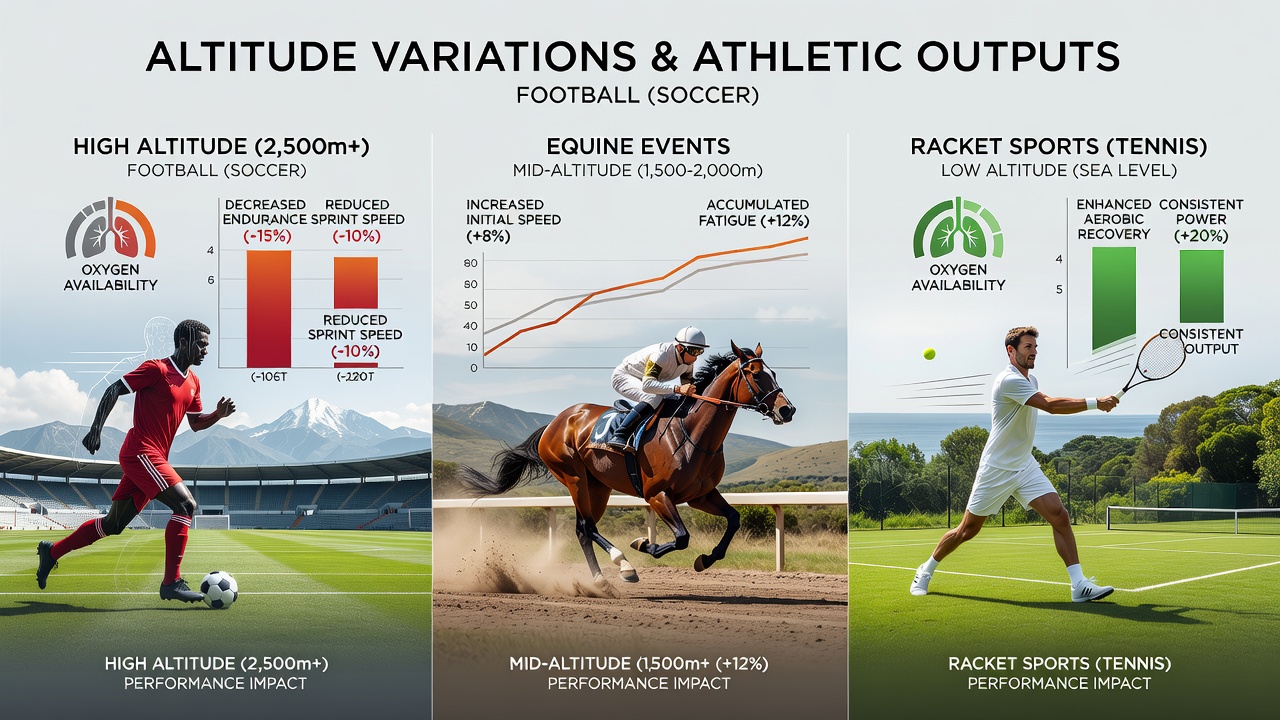
Altitude changes alter oxygen availability and air density in ways that reshape how athletes and animals perform across different sports, with effects showing up most clearly in endurance demands, ball flight characteristics, and recovery patterns. Researchers tracking physiological responses note that partial pressure of oxygen drops roughly 10 percent for every 1,000 meters gained, which forces the body to increase breathing rate and heart output to maintain energy production during sustained efforts.
Football Performance at Elevation
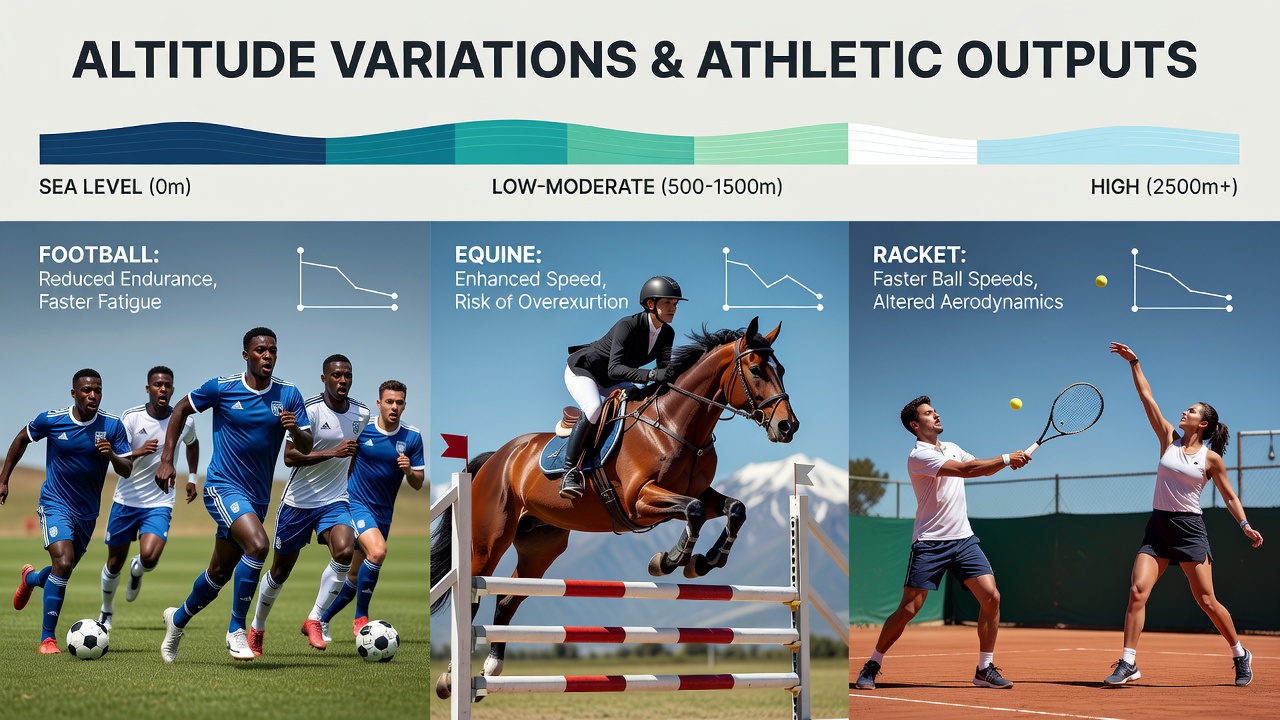
Football matches played above 2,000 meters reveal measurable drops in total distance covered and sprint frequency, according to data collected by match analysts during international fixtures in South American venues such as La Paz and Quito. Players from sea-level squads often record higher lactate thresholds earlier in games because their bodies compensate for thinner air by recruiting more anaerobic pathways, which accelerates fatigue in the second half. Studies published by the National Institutes of Health document that teams accustomed to lower elevations experience a 15 to 20 percent reduction in high-intensity running when suddenly competing at 3,600 meters. Acclimatization protocols lasting 10 to 14 days allow hemoglobin levels to rise and partially offset these losses, yet visiting squads rarely receive that preparation window before match day.
Equine Events and Respiratory Adjustments
Horses competing at altitude face similar oxygen constraints, with studies from veterinary physiology programs showing that maximal oxygen uptake declines as elevation increases because lung diffusion capacity reaches its limit sooner during gallops. Tracks located near 1,600 meters, such as those in parts of the American West, record average winning times that lengthen by two to four seconds over 1,600-meter distances compared with sea-level equivalents. Trainers monitor blood oxygen saturation during workouts and adjust interval sessions to build capillary density in respiratory muscles, yet even adapted animals still exhibit elevated heart rates during the final 400 meters of a race. Data from equine research centers indicate that pulmonary hemorrhage incidents rise modestly at higher venues because increased respiratory effort places greater stress on alveolar capillaries.
Racket Sports and Altered Ball Dynamics
Racket sports experience the most immediate impact through changes in air density rather than oxygen supply alone. Tennis balls travel farther and bounce higher when barometric pressure falls, which researchers at the Australian Institute of Sport quantified during tournaments held above 1,500 meters. Serve speeds remain comparable, but the ball decelerates less, shortening rally lengths and shifting tactical emphasis toward aggressive baseline play or serve-and-volley patterns. Players report needing several days to recalibrate timing on groundstrokes, because the reduced drag allows shots to skid through the court faster than expected. Squash and badminton show parallel effects, with shuttlecocks and balls exhibiting extended flight paths that reward precise placement over raw power.
Cross-Sport Patterns and Recovery Considerations
Across all three disciplines, the first 48 hours after arrival produce the largest performance decrements, after which partial adaptation occurs through increased ventilation and plasma volume expansion. Medical teams now use portable pulse oximeters to track overnight desaturation rates, allowing coaches to modify training loads when readings drop below 85 percent. August 2026 schedules include several high-profile events at elevation that will test updated acclimatization guidelines issued by international federations, particularly for squads traveling across multiple time zones before competing. Hydration strategies also shift because insensible water loss rises with drier air, and electrolyte replacement becomes critical to maintain neuromuscular function during extended matches or races.
Conclusion
Altitude therefore imposes sport-specific constraints that teams and competitors address through targeted preparation, monitoring, and tactical adjustments rather than through any single universal solution. Continued collection of performance metrics at venues worldwide will refine these approaches as more data become available from both laboratory simulations and live competitions.