Altitude's Hidden Influence on Endurance Metrics Across Football Fixtures and Thoroughbred Races
Kai Coleman · Jul 30, 2026
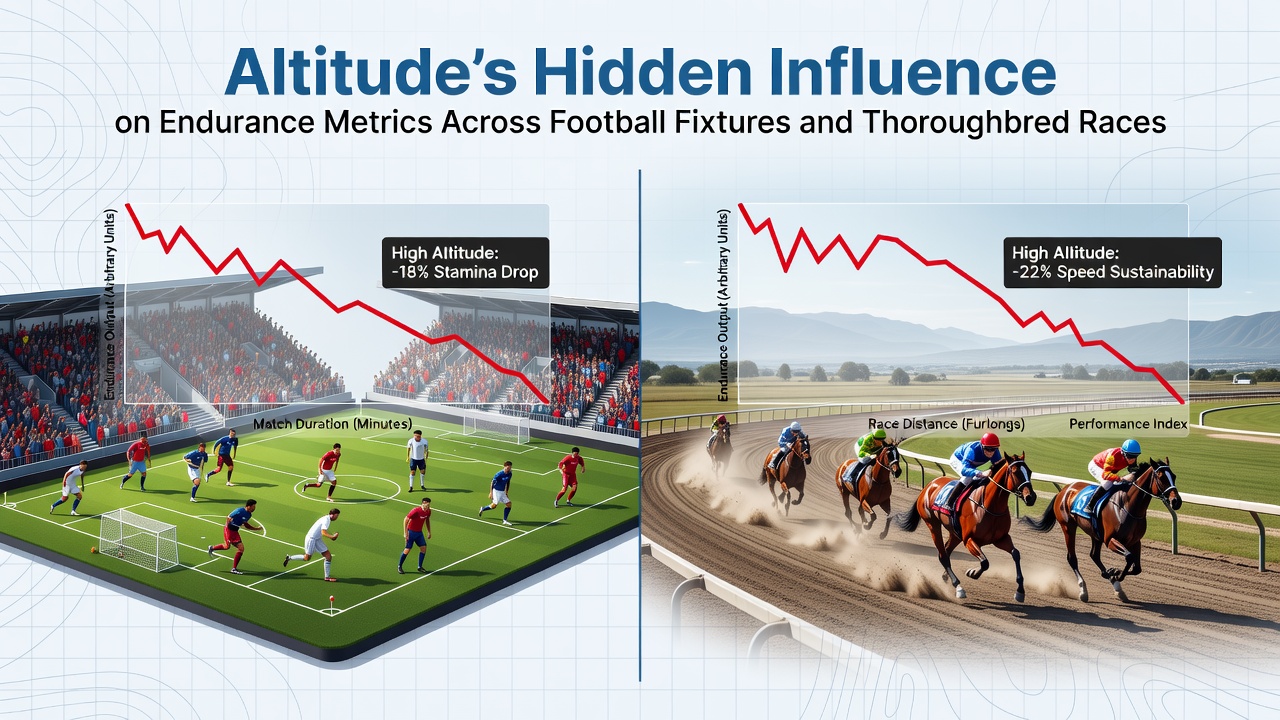
Altitude's Hidden Influence on Endurance Metrics Across Football Fixtures and Thoroughbred Races
Altitude alters oxygen availability and directly shapes endurance outcomes in both football matches and thoroughbred races, with measurable impacts on player and equine performance at elevations above 1500 meters. Data from multiple competitions shows reduced aerobic capacity, elevated heart rates, and slower recovery times when athletes and horses compete in thinner air, while lower-altitude events produce steadier pacing and higher sustained outputs.
Physiological Mechanisms at Play
Reduced partial pressure of oxygen at higher elevations forces the body to work harder to maintain the same workload, and researchers have documented this effect across human athletes and equines alike. Football players exhibit increased blood lactate levels and earlier onset of fatigue during matches at altitude, whereas thoroughbreds display shortened stride lengths and diminished top-end speeds over longer distances. Studies tracking oxygen saturation levels confirm drops of 5 to 10 percent within the first 10 minutes of exercise at 2000 meters, prompting compensatory increases in ventilation rate and cardiac output that cannot be sustained indefinitely.
Football Fixtures in Elevated Venues
Matches in Mexico City at 2240 meters and La Paz at 3600 meters consistently produce lower total distance covered by players compared with sea-level fixtures, according to tracking data collected during CONMEBOL and Liga MX seasons. Teams visiting these venues record higher substitution rates in the second half and reduced high-intensity running after the 60-minute mark. Preparations for the 2026 FIFA World Cup, which includes fixtures scheduled through July 2026 in several highland Mexican stadiums, have prompted clubs to incorporate pre-acclimatization camps lasting seven to ten days. These protocols aim to mitigate the documented 8 to 12 percent decline in repeated sprint ability that visiting squads experience without prior exposure.
Thoroughbred Racing Adaptations
Racecourses situated at altitude, such as those in the American West and parts of South America, show distinct patterns in finishing times and sectional splits. Thoroughbreds competing above 1800 meters require longer recovery intervals between starts, and trainers adjust training regimens by incorporating interval work at simulated altitude or relocating horses weeks in advance. Performance records indicate that horses with prior high-elevation experience maintain better speed maintenance through the final 400 meters, while newcomers often fade earlier. Veterinary monitoring reveals elevated red blood cell counts develop over repeated exposures, yet this adaptation takes several weeks and does not fully offset the initial performance decrement.
Comparative Data Across Sports
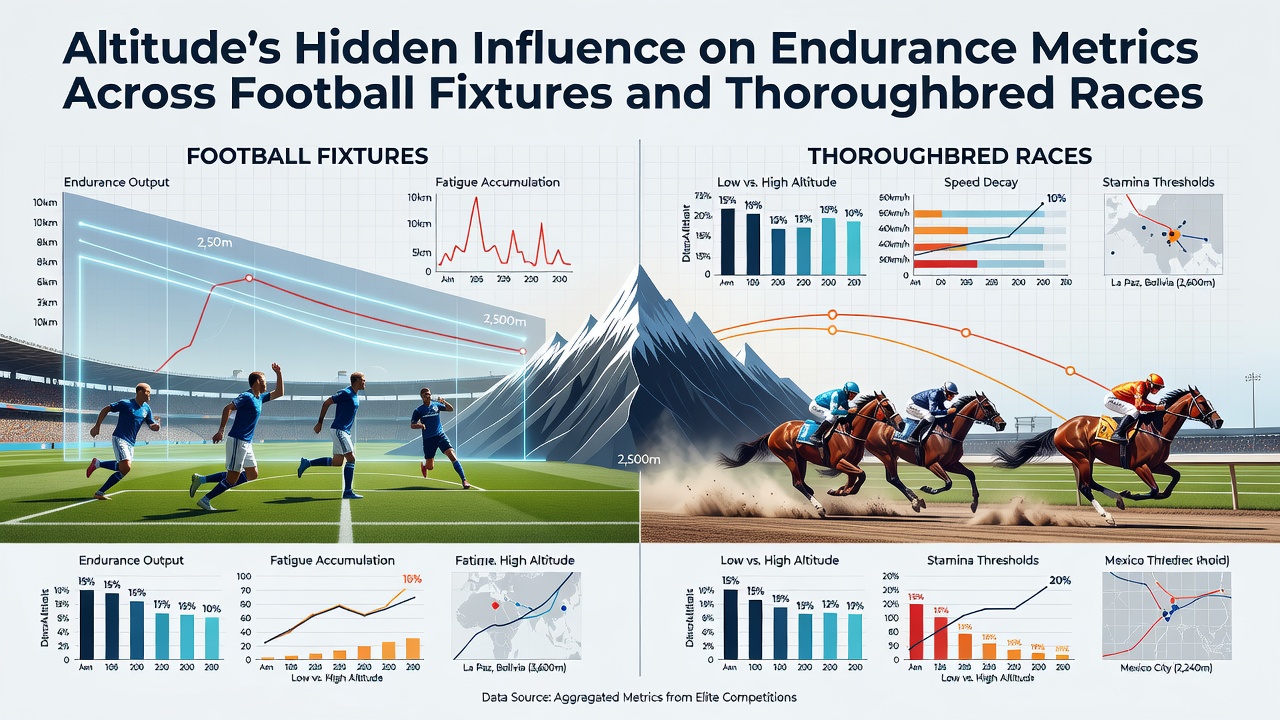
Cross-sport analyses reveal parallel endurance thresholds despite differing biomechanics. Football midfielders and thoroughbreds running 1600-meter races both experience peak oxygen uptake reductions of roughly 15 percent at 2500 meters, leading to conservative early pacing strategies that preserve reserves for later stages. Event organizers in both disciplines now publish altitude-specific guidelines that include mandatory hydration protocols and modified warm-up durations. Figures from the United States Equestrian Federation and similar bodies in Australia indicate that acclimatized horses achieve closer to sea-level benchmarks after 21 days at altitude, mirroring patterns observed in professional football squads that schedule extended training blocks before continental competitions.
Environmental Variables and Measurement
Temperature and humidity interact with altitude to amplify endurance strain, yet controlled studies isolate elevation as the dominant factor when other conditions remain constant. Wearable sensors and GPS units now capture real-time heart rate variability and distance metrics, allowing analysts to quantify the precise point at which performance curves diverge from baseline expectations. In July 2026, ongoing World Cup matches and summer racing meets at comparable elevations will supply additional datasets that refine existing models of fatigue onset and recovery windows.
Conclusion
Altitude imposes consistent constraints on endurance across football and thoroughbred racing through reduced oxygen availability, prompting measurable adjustments in pacing, recovery, and preparation. Organizations continue to refine acclimatization strategies and monitoring technologies as competitions at elevation become more frequent, supported by performance records and physiological research from multiple regions. These adaptations allow competitors to manage the physiological load while preserving competitive integrity at every venue.