Beneath the Surface: Ground Conditions That Quietly Dictate Results Across Soccer Pitches, Racecourses, and Tennis Courts
Clara Richter · May 18, 2026
Beneath the Surface: Ground Conditions That Quietly Dictate Results Across Soccer Pitches, Racecourses, and Tennis Courts
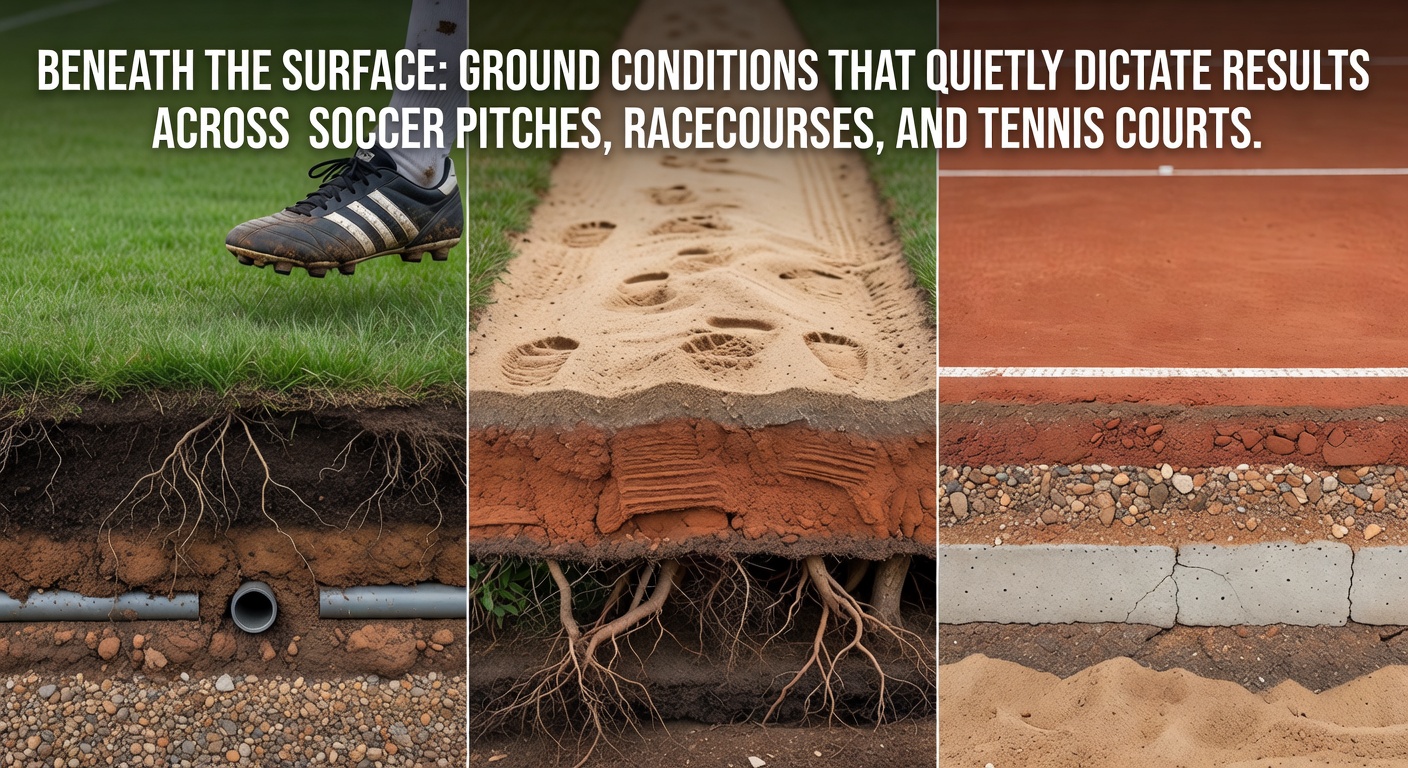
Ground conditions shape performance across multiple sports because surface composition, moisture content, and maintenance practices alter ball behavior, animal traction, and athlete movement in measurable ways. Soccer pitches, racecourses, and tennis courts each respond differently to weather patterns, yet all demonstrate consistent patterns where specific ground states favor certain styles of play or training regimens. Data collected from professional leagues and racing authorities throughout 2025 and into May 2026 confirms these effects appear repeatedly across competitions. Soccer grounds vary widely in grass density and soil firmness depending on climate and irrigation schedules. Firmer surfaces allow faster ball roll and support quick passing sequences while softer pitches increase friction and favor teams that rely on physical duels. Researchers at the University of Queensland tracked Premier League matches over three seasons and found that teams averaging higher possession percentages recorded lower completion rates on pitches rated below 60 on the FIFA quality index because the ball slowed noticeably after each pass. Groundskeepers adjust cutting heights and aeration cycles seasonally, and these interventions produce measurable differences in injury rates as well. Racecourses present an even clearer example of surface influence because official going reports classify conditions daily. Jockeys and trainers adjust strategies once reports indicate firm, good, or heavy ground, since stride length and energy expenditure change dramatically. Heavy ground increases race times by up to 15 percent according to figures released by Racing Australia, while firm ground rewards horses with efficient action and reduces the advantage held by mud specialists. In May 2026, several major meetings in Australia and Europe scheduled on turf tracks reported similar shifts when overnight rain altered the official going from good to soft between morning and afternoon races. Tennis court surfaces produce distinct bounce and speed profiles that players prepare for weeks in advance. Clay courts absorb impact and create higher, slower bounces that reward extended rallies and topspin, whereas grass courts generate lower, faster skids that favor serve-and-volley tactics. Hard courts fall between these extremes yet still vary according to the amount of sand mixed into the acrylic coating. The International Tennis Federation publishes court pace ratings that tournaments must meet, and these ratings correlate directly with average rally length recorded in match data.How Moisture and Composition Alter Soccer Outcomes
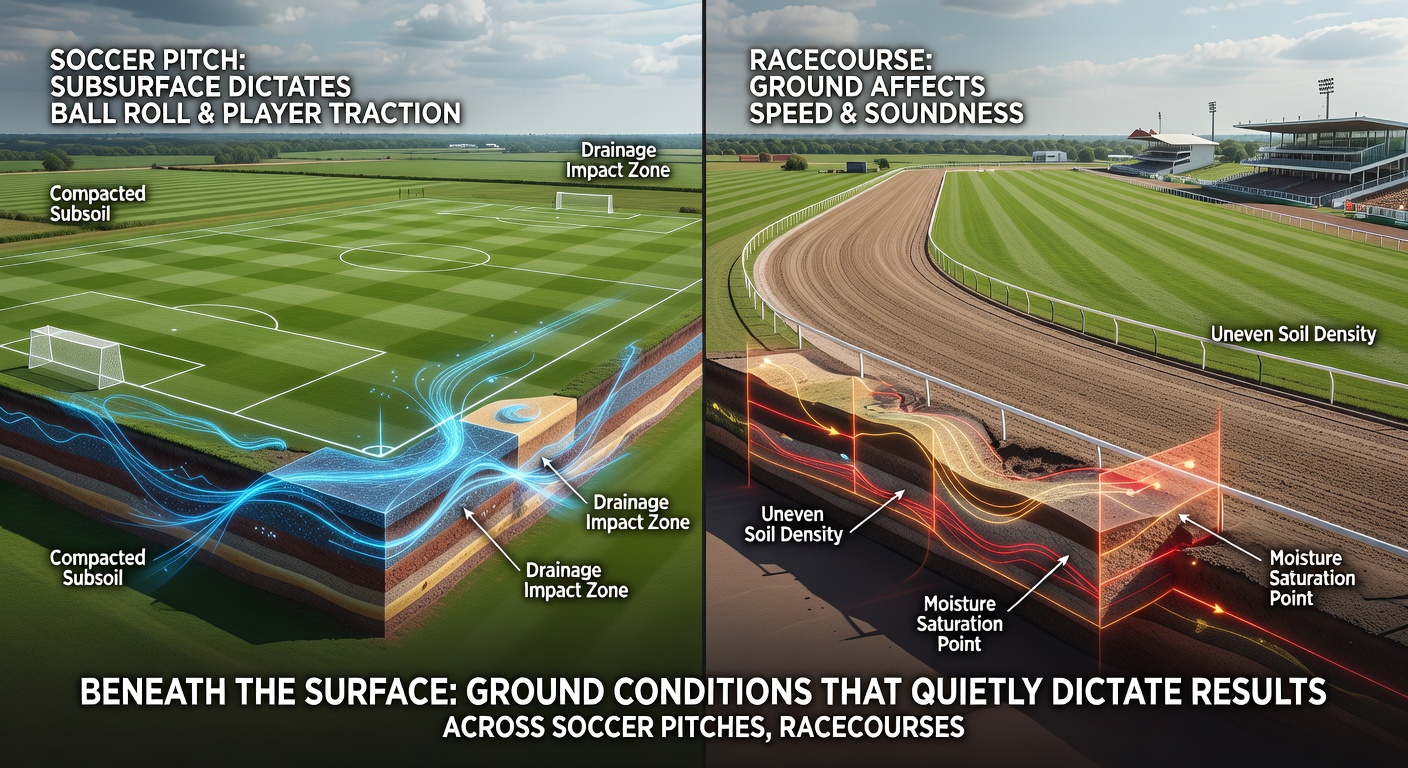
Soil moisture levels affect both player footing and ball trajectory on natural grass pitches. When grounds become saturated, studs sink deeper and acceleration decreases, which reduces the effectiveness of high-pressing systems that depend on rapid directional changes. Groundsmen apply sand dressings and install drainage systems precisely to manage these variables, yet localized wet patches still appear during prolonged rain events and create unpredictable zones where passes deviate. League statisticians note that matches played on pitches with higher moisture readings show elevated numbers of long balls and set-piece goals because teams adapt by bypassing midfield congestion.
Track Surfaces and Racing Performance Patterns
Racecourse maintenance teams monitor subsurface moisture and grass cover throughout the season because these factors determine how horses distribute weight across each stride. Synthetic tracks maintain more consistent conditions than turf yet still respond to temperature fluctuations that alter cushion depth. Trainers review sectional times from previous meetings on similar surfaces to identify horses that handle particular going descriptions effectively. When conditions transition rapidly, as occurred at several tracks during the spring 2026 carnival period, horses returning from recent runs on comparable ground post stronger performances than those switching from firm to heavy surfaces without prior exposure.
Tennis Court Types and Rally Dynamics
Players adapt footwork and shot selection according to the court surface because bounce height and speed dictate optimal positioning. Clay requires longer slides and earlier preparation for high-bouncing shots, while grass demands quicker reactions to low skids. Maintenance crews roll and water courts between sessions to stabilize conditions, yet daily temperature changes still influence ball response. Statistics compiled by Tennis Australia indicate that average point durations increase by roughly 25 percent when matches move from grass to clay courts of equivalent quality ratings, confirming the surface exerts a direct influence on tactical choices throughout each contest.
Maintenance Practices Across All Three Sports
Groundskeepers and course managers employ similar tools including aeration, top-dressing, and irrigation control, yet each sport applies these methods to achieve sport-specific outcomes. Soccer pitches require even surfaces free of divots that could deflect the ball, while racecourses prioritize consistent cushioning to protect equine limbs. Tennis facilities focus on uniform bounce across the entire playing area. Advances in soil sensors now allow real-time monitoring of moisture at multiple depths, and organizations such as the European Turfgrass Association have documented how these technologies reduce variability in surface performance from one event to the next.
Conclusion
Ground conditions operate as silent variables that influence every phase of competition in soccer, horse racing, and tennis. Surface measurements, moisture data, and maintenance records combine to create predictable patterns that repeat across venues and seasons. Observers who track these elements alongside performance statistics gain clearer insight into why certain athletes or teams record stronger results under specific conditions, while others encounter unexpected challenges when surfaces deviate from expectations.