How Venue Acoustics Reshape Split-Second Choices in Football, Tennis, and Thoroughbred Events
Harper Schmidt · Jun 25, 2026
How Venue Acoustics Reshape Split-Second Choices in Football, Tennis, and Thoroughbred Events
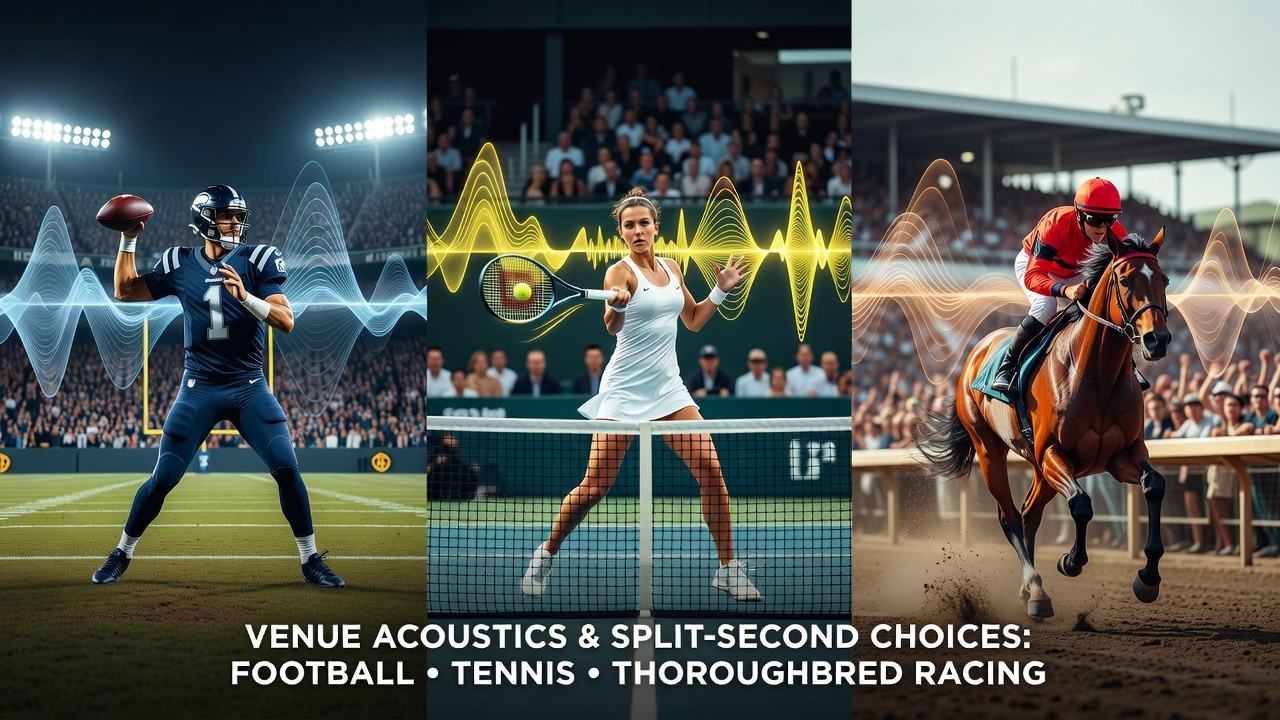
Venue acoustics play a measurable role in shaping split-second decisions across football, tennis, and thoroughbred racing, with sound levels and reverberation patterns altering how participants process auditory cues during competition. Research from sports science institutions shows that ambient noise masks verbal signals between teammates while amplifying crowd reactions that prompt quicker or delayed reactions from officials and athletes alike.
Football Stadiums and Referee Response Patterns
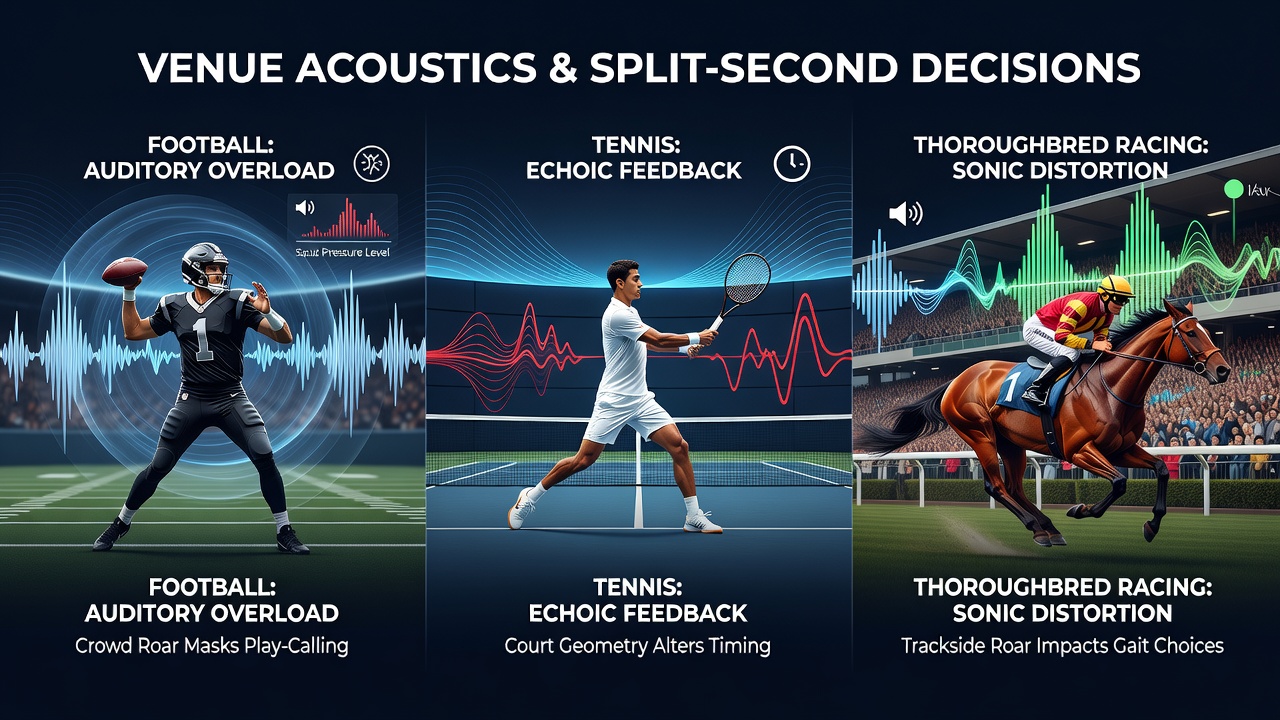
Football matches in large enclosed stadiums generate decibel levels that frequently exceed 100 during peak moments, according to data collected by European football federations. Referees must interpret fouls, offsides, and handball incidents within fractions of a second, yet crowd roar often obscures the sound of player contact or the whistle itself, leading officials to rely more heavily on visual cues alone. Studies conducted at major European venues reveal that penalty decisions increase by measurable margins in home-team dominated acoustic environments because sustained noise pressure influences the timing of flag raises and card issuance.
Player communication suffers similar disruption, with midfielders struggling to hear calls for overlapping runs or defensive shifts when stands reverberate with continuous chanting. Data from tracking systems installed in professional leagues indicates that pass completion rates dip slightly in the noisiest sections of the pitch, particularly during set-piece situations where verbal coordination determines positioning. Visiting teams adapt by using pre-arranged hand signals that bypass auditory interference, while home sides maintain higher tempo because familiar acoustics allow them to time movements without hesitation.
Tennis Court Echoes and Line Call Precision
Tennis venues create distinct acoustic profiles depending on whether play occurs indoors or on open-air courts, with hard surfaces bouncing sound back toward players and officials at different intervals. Umpires seated above the baseline must judge ball impact sounds against crowd murmurs, and research from the International Tennis Federation shows that indoor arenas with low ceilings produce sharper reverberations that can shift perceived timing of serves by milliseconds. Players adjust their split-second choices on second serves and returns because they hear the ball strike the racket strings more clearly in some environments than others.
Hawk-Eye reviews have documented instances where acoustic feedback from packed stands coincides with marginal line calls, prompting players to challenge decisions at higher rates during evening sessions when ambient noise peaks. Data from tournaments held in June 2026 at covered stadiums highlighted how reduced echo in newer facilities allowed line judges to maintain consistency across multiple matches, whereas older venues with reflective walls showed greater variance in overrule frequency. Coaches positioned courtside note that players who train regularly in similar acoustic conditions execute drop shots and volleys with fewer unforced errors because they anticipate sound reflections that signal opponent movement.
Thoroughbred Racetracks and Jockey Timing Adjustments
Thoroughbred events unfold across open tracks where wind and grandstand positioning create variable sound fields that reach horses and riders at different moments in the race. Jockeys report that the sound of approaching hooves and crowd reactions from the home straight influences when they ask for maximum effort, with acoustic mapping studies from Australian racing authorities showing that horses respond to auditory triggers such as the roar near the finish line by altering stride length in the final 200 meters. Trainers prepare animals by exposing them to recorded crowd noise during workouts so that race-day acoustics do not trigger unexpected accelerations or hesitations.
Starter procedures also depend on clear auditory signals, yet tracks with large grandstands positioned close to the barriers can produce echoes that delay the perceived start for both horses and riders. Figures released by regulatory bodies in North America indicate that races at venues with modern sound-dampening barriers experience fewer false starts compared with older facilities where reverberation lingers. Jockeys adapt their split-second decisions on whip timing and rein pressure because they learn to filter trackside announcements and spectator noise against the rhythm of the field around them.
Cross-Sport Acoustic Interactions
Patterns emerge when comparing acoustic effects across the three sports, particularly in how venue design either amplifies or dampens critical audio information. Football pitches surrounded by tiered seating create focused sound waves directed toward the center circle, while tennis courts distribute echoes more evenly across the playing surface and racetracks allow sound to dissipate along the straightaways. Observers note that athletes who compete across multiple disciplines develop heightened sensitivity to these differences, adjusting reaction thresholds accordingly during mixed training sessions.
Equipment and surface materials further modulate how sound travels, with artificial turf in football absorbing certain frequencies that grass does not, indoor tennis courts reflecting high-pitched racket impacts, and dirt or turf tracks transmitting hoofbeats at distinct volumes. Research published in sports engineering journals demonstrates that these material differences correlate with measurable shifts in decision speed for referees, umpires, and jockeys who operate under tight time constraints.
Conclusion
Acoustic conditions at sports venues continue to influence split-second choices through direct effects on hearing, signal masking, and learned behavioral responses. Data from governing bodies and independent studies across football, tennis, and thoroughbred racing confirm that participants adapt strategies based on predictable sound environments, while venue operators explore design modifications that balance spectator experience with competitive fairness. As events unfold through 2026 and beyond, ongoing acoustic monitoring provides additional insights into how sound shapes outcomes in these disciplines.