Mapping the gaps between games: how scheduled pauses recalibrate team dynamics and betting probabilities across leagues and circuits
Katja Lange · Aug 8, 2026

Mapping the gaps between games: how scheduled pauses recalibrate team dynamics and betting probabilities across leagues and circuits
Scheduled pauses appear throughout the calendars of major leagues and circuits, from international breaks in football to bye rounds in tennis tournaments and layoff periods between horse racing meetings. These intervals allow squads and individual competitors to reset physically and tactically, which in turn influences performance metrics and the probability assessments used by betting markets. Data from multiple seasons shows that teams returning after structured rest periods often display altered win rates, goal differentials, and head-to-head outcomes compared with uninterrupted schedules.
Recalibration of squad cohesion and player availability
Football leagues across Europe and South America insert international windows that remove key players from club environments for two to three weeks at a time. During these periods coaching staffs adjust training loads, integrate youth academy members, and refine set-piece routines without the pressure of immediate match preparation. Observers note that clubs with deeper benches maintain higher points-per-game averages after such breaks, while squads reliant on a narrow core of starters show increased variance in results. Similar patterns emerge in tennis when players receive scheduled byes in ATP and WTA events; those who use the extra recovery time to address minor injuries record improved first-serve percentages and fewer unforced errors in subsequent rounds.
Horse racing circuits schedule breaks between major meetings, allowing trainers to freshen horses, alter training regimens, and monitor veterinary markers. Records from Australian and North American tracks indicate that horses returning after 28 to 45 days of rest post a higher strike rate in sprints than those racing on shorter intervals, although longer layoffs beyond 60 days correlate with reduced performance until conditioning cycles complete.
Adjustments in betting market probabilities
Betting exchanges and traditional bookmakers revise odds when scheduled pauses create uneven rest distributions between competitors. Statistical models that incorporate rest differentials consistently assign elevated probabilities to sides returning from breaks when opponent fatigue indicators remain elevated. In football, for example, clubs playing midweek European fixtures before an international window often see their implied win probabilities drop by 4 to 7 percentage points upon resumption, according to historical data compiled by European sports analytics platforms. Tennis markets respond similarly when a player exits early from one tournament and gains additional rest before the next; live odds adjust within minutes of schedule confirmation to reflect the expected service-hold advantage.
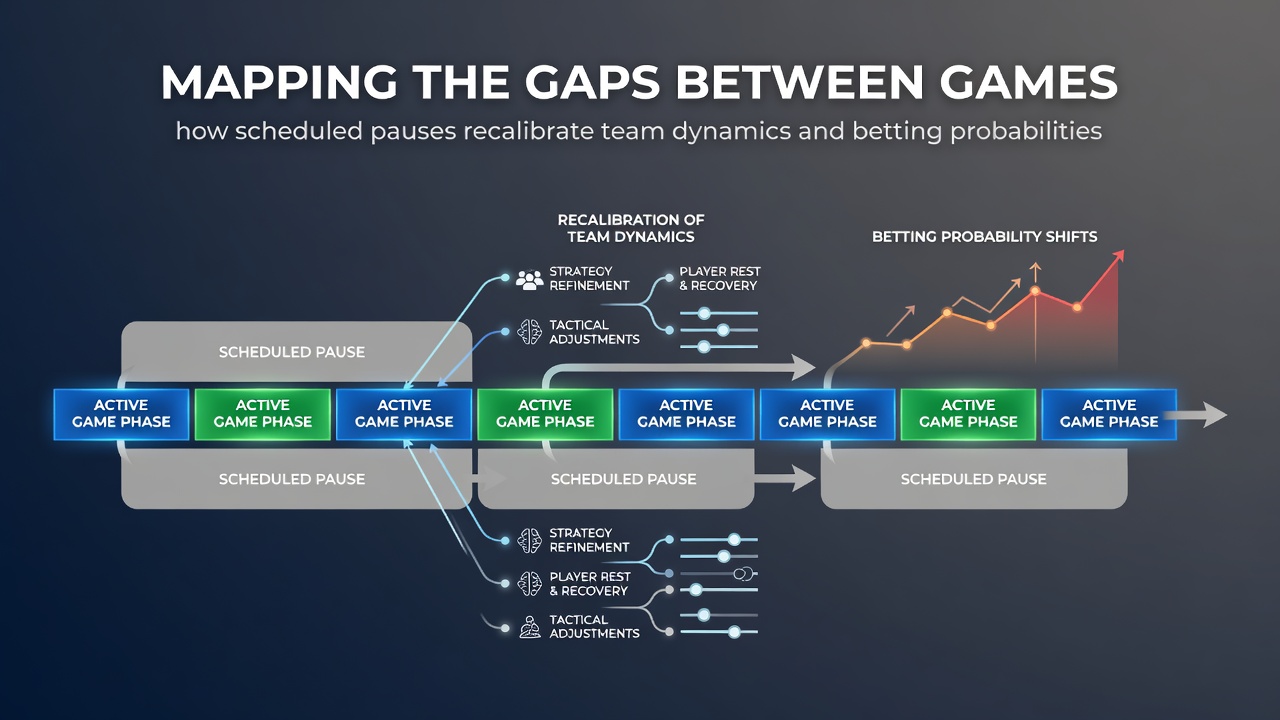
August 2026 provides a clear illustration across multiple circuits. The European football season pauses for international qualifiers while simultaneously the US Open tennis draw advances and several North American thoroughbred festivals conclude their summer meets. Markets tracking accumulators across these disciplines register measurable shifts once fixture lists and draw schedules become final. Analysts tracking these movements report that probability recalibrations occur most sharply in the 48 hours following official announcements rather than during the pause itself.
Cross-league and cross-circuit comparisons
Researchers comparing football, tennis, and horse racing datasets find that the magnitude of performance change after pauses varies by sport-specific demands. Football teams benefit most from tactical recalibration during longer breaks, whereas tennis players show larger gains from physical recovery alone. In horse racing the effect hinges on distance category: stayers require more extensive conditioning windows than sprinters, leading to distinct probability weightings in ante-post markets. A study published by the University of Queensland's Centre for Sports Science documented these differentials across 12 seasons of data, highlighting that rest-optimized strategies produce measurable edges when applied consistently across codes.
League structures also influence outcomes. Domestic cups that insert mid-season pauses produce different dynamics than continuous league schedules, and circuits with mandatory veterinary or medical stand-down periods introduce additional variables into probability calculations. Observers tracking global patterns note that federations releasing unified rest guidelines, such as those issued by the Canadian Centre for Ethics in Sport, allow markets to incorporate standardized recovery assumptions into pricing models.
Conclusion
Scheduled pauses function as recurring calibration points that reshape both on-field dynamics and the probability frameworks used in betting across football leagues, tennis circuits, and horse racing meetings. Evidence from performance databases and market movements demonstrates that these intervals create measurable, sport-specific effects on results and odds adjustments. Continued collection of granular data around rest intervals supports refined modeling for future seasons, including the 2026 calendar where overlapping international and circuit schedules again highlight these interactions.