Referee Tendencies and Official Patterns: Analyzing Decision Biases in Soccer Games, Stewards' Calls in Racing, and Umpire Rulings in Tennis for Value Opportunities
Katja Lange · Jun 1, 2026
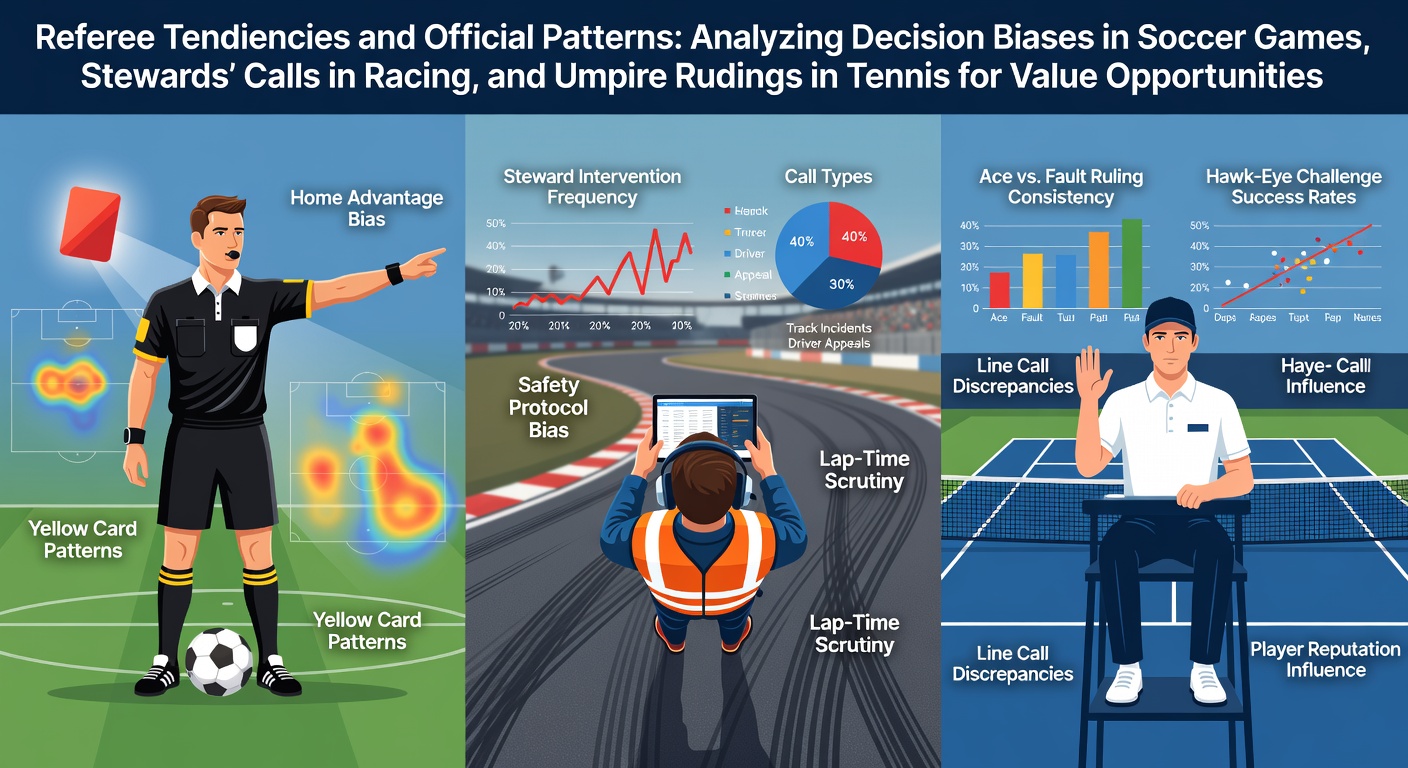
Referee Tendencies and Official Patterns: Analyzing Decision Biases in Soccer Games, Stewards' Calls in Racing, and Umpire Rulings in Tennis for Value Opportunities
Decision patterns among officials shape outcomes across soccer, horse racing, and tennis in ways that extend beyond individual judgment calls. Data compiled over multiple seasons shows consistent tendencies in how referees award penalties, stewards assess interference, and umpires enforce time violations or foot faults. These patterns emerge from factors including venue conditions, participant profiles, and timing within matches or races, which creates measurable edges for those who track historical rulings rather than relying on averages alone.
Soccer Referee Patterns in Card Distribution and Penalty Awards
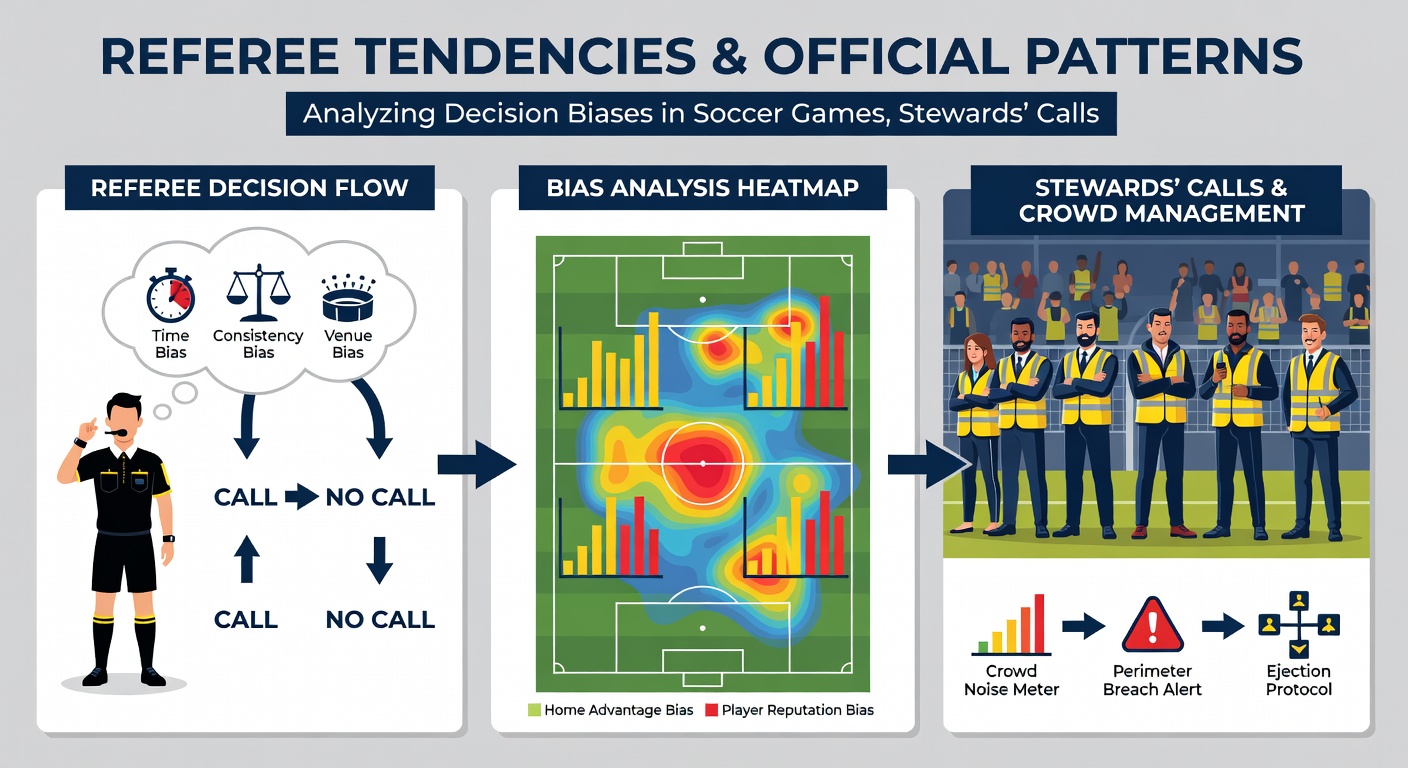
League records from major European competitions indicate that certain referees issue yellow cards at rates 15 to 20 percent above the seasonal average when assigned to matches involving teams with aggressive pressing styles. Home teams receive fewer cautions on average according to aggregated figures from the 2024 through 2026 campaigns, a discrepancy that widens during evening fixtures where crowd noise reaches peak levels. Penalty decisions follow similar clustering, with data from the Bundesliga and Serie A revealing higher award rates for attacking sides that reach the penalty area through wide channels rather than central build-up play.
Research published in peer-reviewed sports science journals highlights how referee experience levels correlate with these distributions, as newer officials tend to allow more physical contact early in games before tightening enforcement after the 60-minute mark. This shift produces observable spikes in second-half bookings during high-stakes fixtures. Those monitoring official assignments in June 2026 will note continued application of these trends as summer tournaments progress into knockout stages where fatigue influences both player behavior and official tolerance thresholds.
Stewards' Calls and Interference Patterns in Horse Racing
Steward inquiries in flat and jump racing demonstrate repeatable preferences when reviewing video footage of mid-race contact. Tracks with tighter turns record higher rates of disqualification for jockeys positioned on the inside rail, while wider circuits see more warnings issued for drifting rather than outright bans. Stewards at major Australian and North American venues apply stricter interpretations of "causing interference" during sprint distances under 1400 meters compared with longer routes where pace differentials allow greater margin for correction.
Figures released by regional racing authorities show that repeat offenders among jockeys face elevated scrutiny in subsequent rides, resulting in increased inquiry frequency even when contact appears marginal. This pattern holds across both turf and synthetic surfaces, although stewards at synthetic tracks issue fewer final disqualifications because surface consistency reduces claims of unstable footing. Observers tracking these tendencies note that photo-finish and inquiry data released within 24 hours of each meeting provides the clearest window into evolving enforcement standards.
Umpire Rulings and Challenge Outcomes in Tennis
Chair umpires in ATP and WTA events apply time violation warnings at varying frequencies depending on match duration and surface type. Clay court tournaments produce lower rates of point penalties for slow play compared with hard and grass surfaces where ball marks offer less visual reference for timing disputes. Hawk-Eye challenge success rates also vary by official, with some umpires upholding line calls more frequently on deuce points during deciding sets according to match log analysis from Grand Slam events between 2023 and 2026.
Foot fault enforcement shows geographic clustering, as umpires trained in European academies issue higher totals during indoor events while those from American circuits demonstrate greater tolerance on outdoor courts with variable wind conditions. These differences become pronounced during tiebreak sequences where rapid point accumulation leaves less time for procedural resets. Tournament data released by the International Tennis Federation confirms that challenge percentages remain stable within individual officials across multiple events, allowing pattern recognition when specific umpires receive assignments at upcoming June 2026 stops on the calendar.
Cross-Sport Value Identification Through Official Tracking
Betting markets adjust slowly to documented official tendencies because public focus remains on player or horse form rather than enforcement records. Soccer markets on card totals respond when referees with elevated booking rates receive high-profile assignments, while racing win pools shift when stewards known for stricter interference rulings oversee feature races. Tennis set and game betting lines move when umpires with low challenge-overturn percentages handle matches involving players who rely heavily on baseline accuracy.
Integration of these datasets requires cross-referencing assignment announcements with historical logs rather than generalized statistics. European racing boards and North American tennis governing bodies publish inquiry summaries and violation tallies that feed directly into such models. Patterns observed during early rounds of major events often carry forward into later stages because officials maintain consistent approaches once calibrated to specific tournament conditions.
Conclusion
Decision biases across these three sports rest on measurable patterns rather than isolated incidents. Tracking referee card distributions, steward interference thresholds, and umpire enforcement frequencies supplies concrete inputs for identifying value where markets price average rather than specific official behavior. Continued collection of assignment and outcome data through June 2026 will refine these models as new fixtures and race meetings generate additional reference points.